Not for nothing is it called the City of Discovery.
Dundee was one of the earliest supporters of journalists reporting from overseas which gained prominence after William Russell made his name in 1854 with his Times despatches from the Crimean War.
Only in this case the reporters were two young women – Bessie Maxwell (right)and Marie Imandt (left).
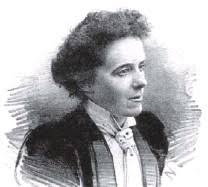
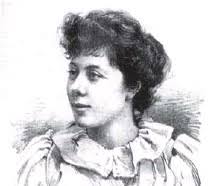
Both staffers on the Courier and Advertiser, they were asked to go round the world to report primarily on the lives of women in other lands. The idea was the brainwave of the original DC (David Couper) Thomson who gave his name to the Dundee publishing house.
Their exploits formed the backbone of an academic paper by Japanese journalist Jun Suzuki on a fellowship at the Reuters Institute for the Study of Journalism in Oxford.
You can read a summary of Jun’s paper and download the full version here: https://reutersinstitute.politics.ox.ac.uk/lessons-modern-foreign-correspondence-19th-century-dundee
Jun’s interest was sparked by a chance discovery of a book published by Abertay Historical Society. A Tour Round the World by DC Thomson’s Female Journalists in 1894 was written by Susan Keracher, curator at the McManus Art Gallery in Dundee.
A desk editor for the Nikkei media group, Jun had himself served four years as a foreign correspondent in its Jakarta bureau. He draws parallels with the plight and challenges faced by female journalists abroad then and now.
Bessie and Marie’s experiences paved the way for others. In Boston, they naturally sought out Williamina Fleming who had emigrated from Dundee with her husband but was left alone as single parent. She took on work as a maid until taken on by Harvard College Observatory, where she demonstrated extraordinary talent as an astronomer and was known as the “human computer.”
This was a golden era for “provincial” journalism in Britain. Every city worth its salt had flourishing daily newspapers, morning and evening, plus Sunday and Saturday sports editions. Local proprietors set up the Press Association to satisfy prodigious demand for copy.
Dundee was a leading light in this group. DC Thomson even commissioned its own film in 1911 to mark the 50th anniversary of the Courier. You can watch a short clip from it here: https://movingimage.nls.uk/film/1604/74961073
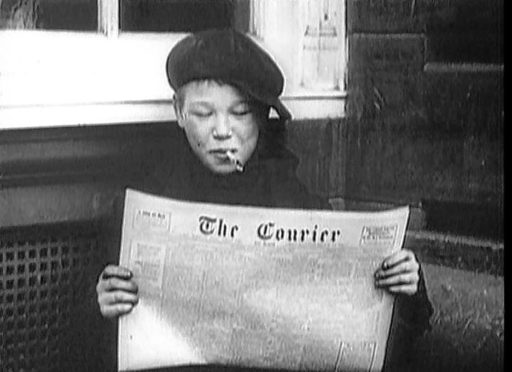
As well as its mainstays of magazines and comics, DC Thomson demonstrated enterprise in the ITV era, taking a profitable stake in Southern Television, and in the internet era with its company Brightsolid making millions of newspapers and census returns available online.
Newspapers, of course, generate their own mythology sometimes following the maxim of not letting the facts interfere with a good story. Aberdeen provided the most enduring myth for the Titanic’s sinking in 1912 and the supposed headline “North-east man lost at sea; 1500 perish in Titanic” which under close examination turns out to be complete balderdash.
Others followed Bessie and Marie’s example in the 1930s. Elizabeth Wiskemann filed reports from Germany about the rising evils of Hitler. She was interrogated by the Gestapo and finally expelled. During World War Two she worked in neutral Switzerland for the Foreign Office and provided early information on the mass killings in Auschwitz.
Another exceptional foreign correspondent was Marvin Breckinridge, the only woman among Ed Murrow’s “boys” reporting from London for CBS. Her reports and photographs in 1940 were the first to bring the spirit of the Blitz to American audiences.
DC Thomson also provided the initial training for James Cameron, the doyen of post-war British foreign correspondents. In this clip (11m) from 1968, he returns to the city and reflects on his early time there (glib sentimentality was not his forte): https://www.youtube.com/watch?v=CRoO7T8nAAA
Cameron demonstrated the value of having a reporter on the spot. Artificial intelligence can never match human eye-witness.
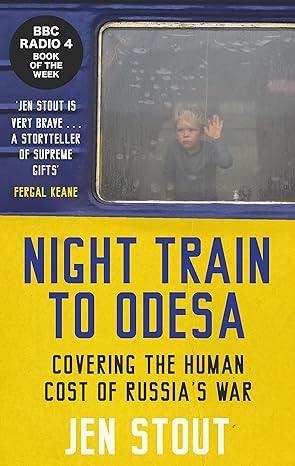
Russia’s invasion of Ukraine was vividly brought to life among Sunday Post readers by front line accounts from a Scottish freelance journalist, Jen Stout.
She had been commissioned by its then editor Jim Wilson from the start of the war and her book Night Train to Odessa has earned much praise.
Thus the tradition of Bessie Maxwell and Marie Imandt lives on at DC Thomson.
However this has created a crisis with the celebrated Dundee mnemonic. The city was known for the three J’s – Jam, Jute and Journalism. I added a fourth, Javascript, recognising the web work of Brightsolid.
Now we have Jun, Jim and Jen to add… Eeek! as one of Bash Street Kids might say.
Update, April 2025
An interesting post from Lionel Gauthier, curator of the Lake Geneva Museum in Nyon, on two Swiss lads who joined a round the world package in 1878. They weren’t quitters and continued despite problems in the Panama Canal and a deadly outbreak of yellow fever.
Further reading: Dundee’s Two Intrepid Ladies: A Tour Round the World by DC Thomson’s Female Journalists in 1894 by Susan Keracher, Abertay Historical Society (2012).
Thanks to Graham Ogilvy for updating me on Marie’s father. Peter Imandt was a German revolutionary and friend of Karl Marx. Good post here from James Barrowman.
And another DC Thomson title, the People’s Friend, has been added to the British Newspaper Archive (one of Brightsolid’s digitisation projects). Rosie Staveley-Wadham discusses it here.
Categories: case studies, gems from the archive, history on the web
 The History Company
Professor Margaret Fairlie’s brother, James Fairlie, got his start as a journalist at The People’s Journal, in Dundee. He was one of the youngest editors in the country.